
 English
 中文简体
中文简体 русский
How to Determine the Short-Time Withstand Current Capacity of DC Charging Station Relays to Prevent Contact Welding Under Battery Short-Circuit Risks
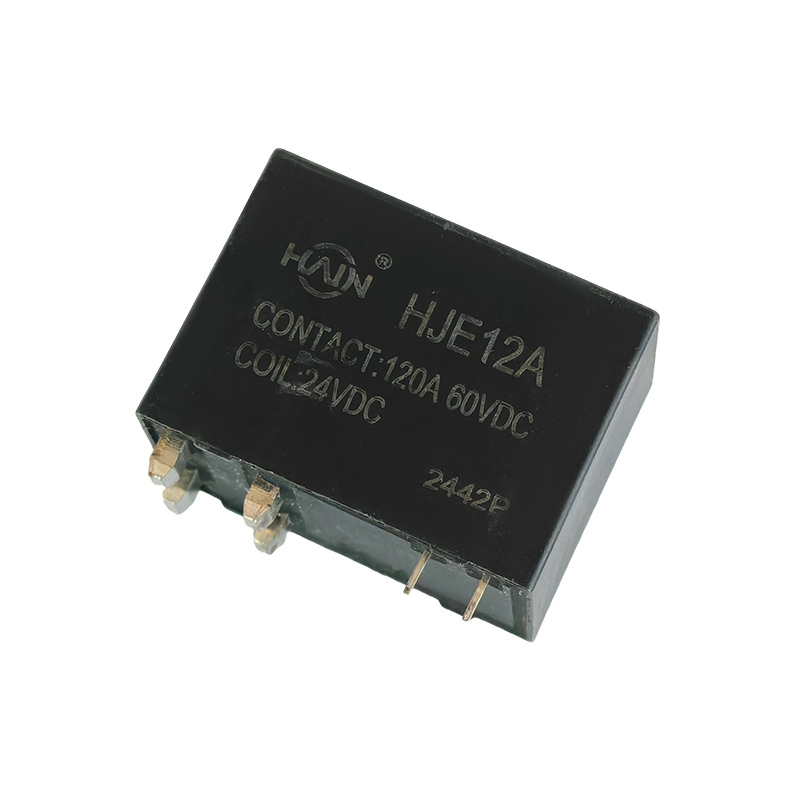
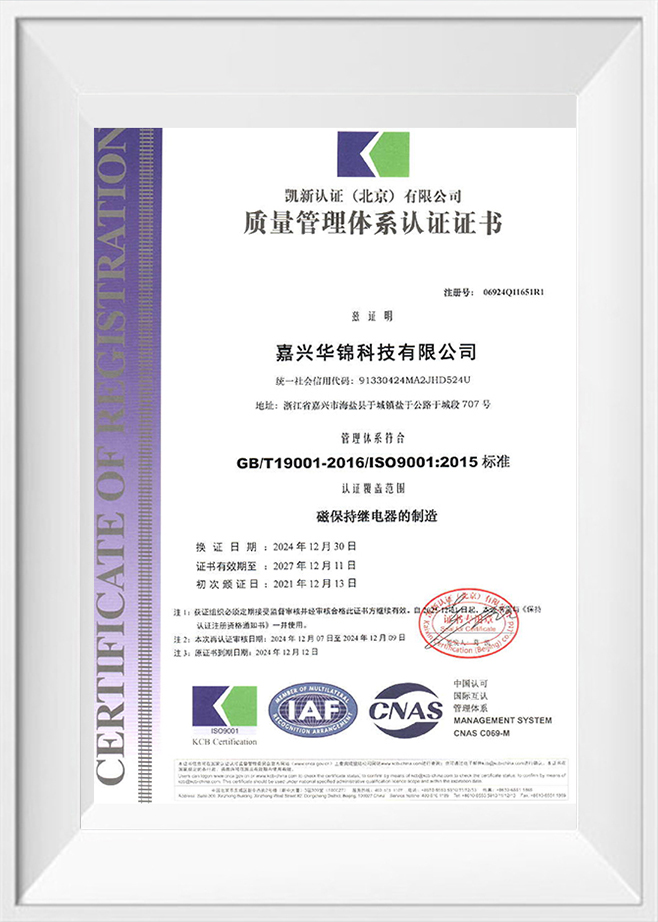
High-power DC fast-charging stations interface directly with large-capacity electric vehicle (EV) battery packs. In the event of a catastrophic insulation failure or an unexpected short-circuit on the vehicle side, the battery can unleash an immense short-circuit surge current back into the charging system. To guarantee safety, the integrated DC Charging Station Relay must feature an exceptional short-time withstand current (STC) capability to prevent catastrophic failure or contact welding before the circuit breakers or high-speed fuses can safely blow. As an advanced specialized manufacturer, Huajin Technology Jiaxing Co., Ltd. applies its deep R&D expertise and ISO9001-2015 certified production workflows to deliver robust relay systems designed to handle severe electrical faults.
To successfully integrate these safety boundaries, engineers must coordinate the short-circuit peak currents with the exact response time of the system's primary overcurrent protection devices.
1. The Electrical Dynamics of Short-Circuit Faults in DC Charging
Unlike alternating current (AC) systems, a direct current (DC) short-circuit does not have natural voltage zero-crossings. When an unexpected low-resistance short occurs, the current rises at an extremely fast rate ($di/dt$), driven by the low internal resistance of the battery pack. If the DC charging station relay does not possess adequate short-time withstand current ratings, two structural failures occur:
- Contact Electro-Dynamic Repulsion: Massive surge currents flowing through the closed relay contacts generate strong electromagnetic repulsive forces (Holm forces). If these forces exceed the mechanical spring holding force, the contacts will slightly separate, creating an instantaneous high-temperature electric arc that welds them together permanently.
- Thermal Melt Accumulation: Extreme current loads generate localized Joulean heating ($I^2t$) at the contact interface. If the heat generated exceeds the melting point of the contact material before the fuse opens, structural welding occurs instantly.
2. Coordinating Withstand Current with Fuse Disconnection Time
A relay is not designed to interrupt short-circuit currents on its own; that is the task of the ultra-fast semiconductor fuse. Instead, the relay must remain perfectly closed and structurally intact during the exact duration it takes for the fuse to clear the fault. Typically, high-speed DC charging fuses clear a heavy short-circuit fault within 1 to 10 milliseconds. Therefore, a high-quality DC relay must specify its withstand current capacity across these precise micro-intervals, such as 10ms or 30ms thresholds.
3. Parameter Comparison Matrix: Relay Withstand vs. Fault Conditions
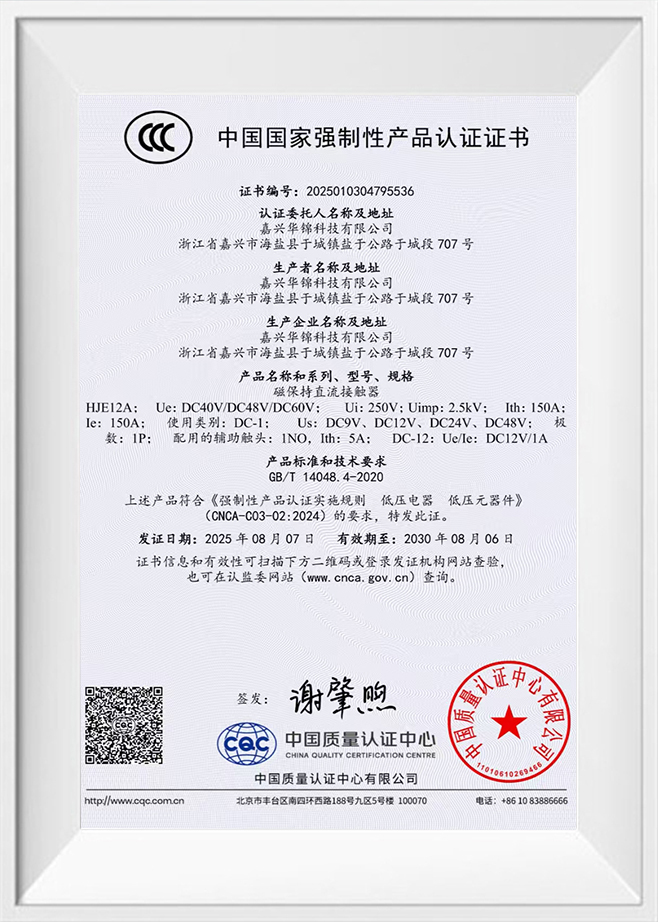
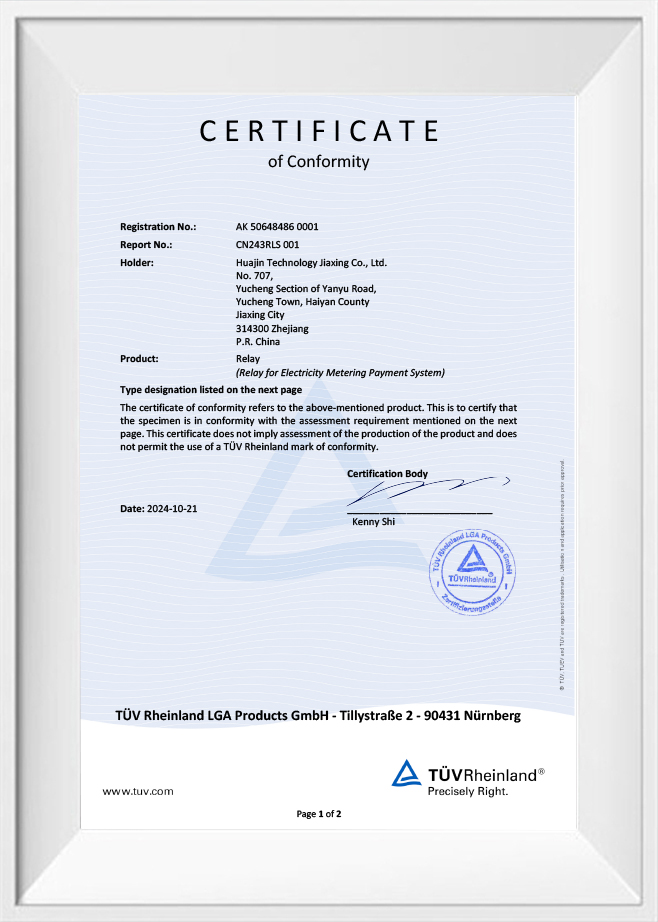
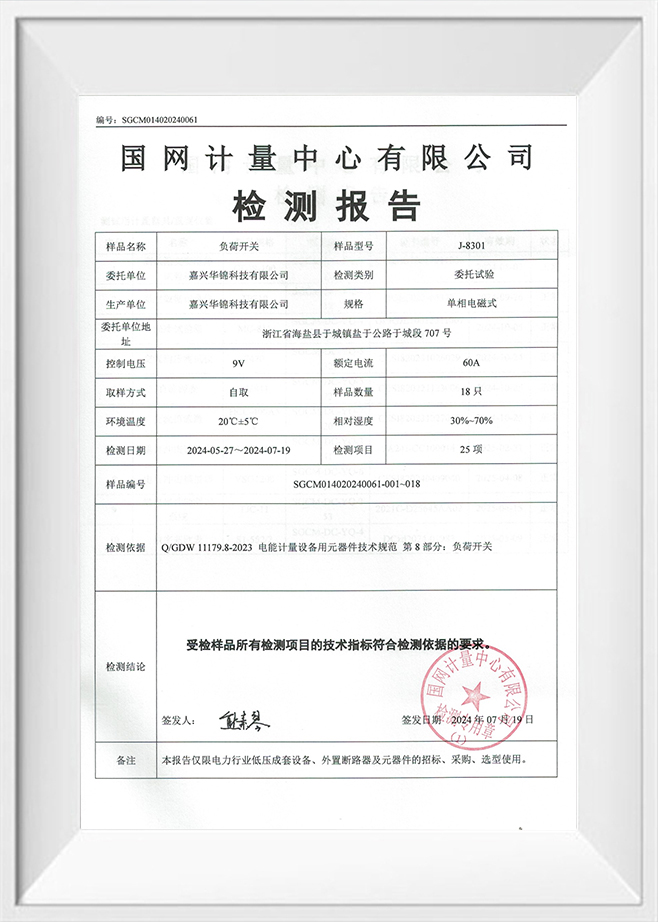
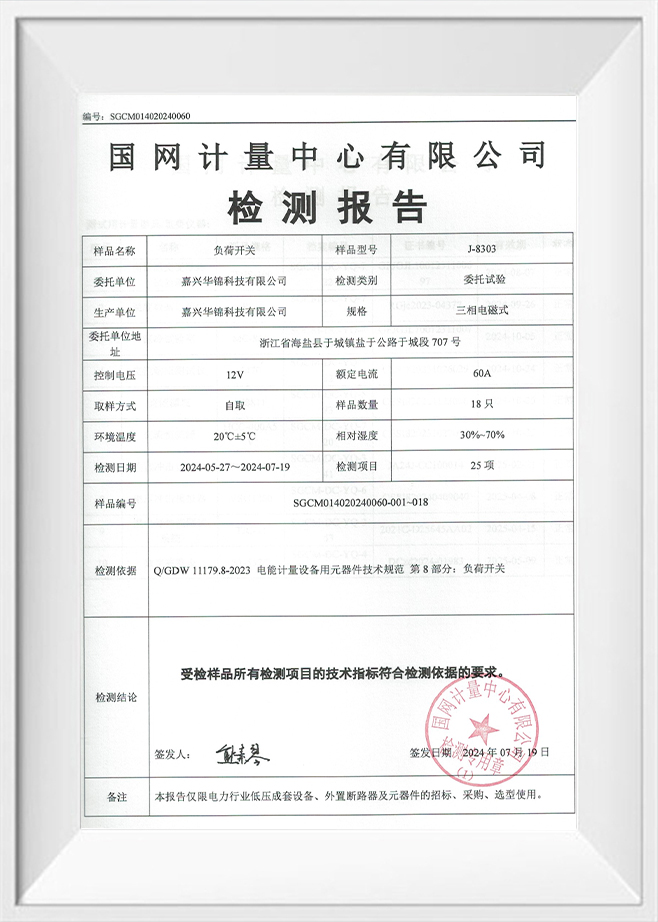
The matrix below outlines the critical electrical parameter requirements for ensuring successful protection coordination under varying fault severities. Huajin Technology Jiaxing Co., Ltd. relies on strict evaluation standards backed by their CCC, TUV, and State Grid certifications to achieve these high-reliability targets.
| Minor System Overload | 1.5x to 2x Rated Current | Withstand for up to 1 second without damage | Standard Circuit Breaker / Software Trip |
| Standard Distribution Fault | 5x to 10x Rated Current | Withstand for 30 milliseconds without contact welding | Fast-acting DC Circuit Breaker |
| Severe Battery Pack Short-Circuit | 20x to 40x Rated Current (up to several kA) | Withstand for 1 to 10 milliseconds (Peak $I^2t$ capacity) | Ultra-Fast Semiconductor Fuse (aR / gR type) |
4. Contact Material Innovation for Anti-Welding Resilience
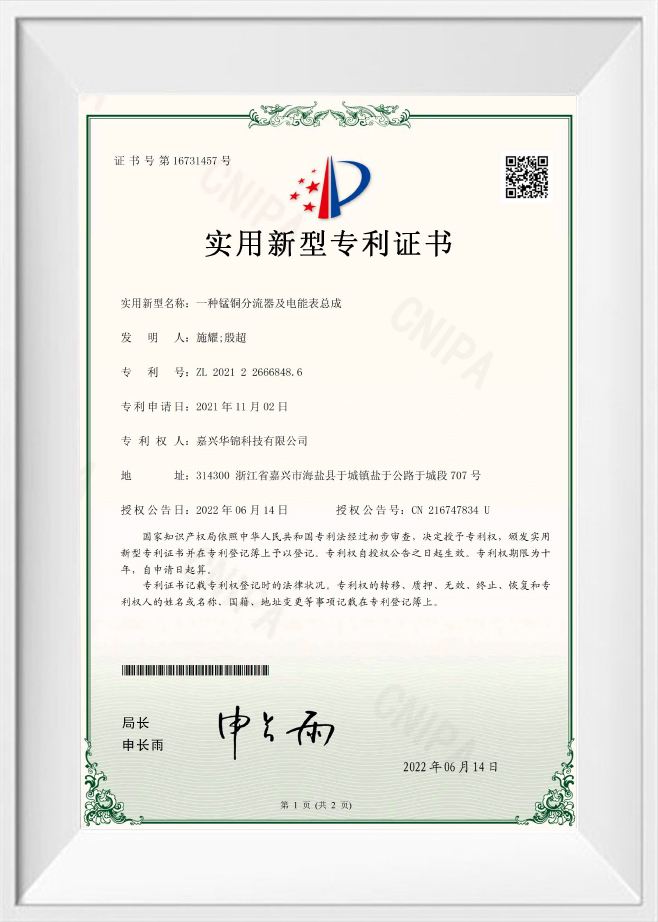
Achieving a high short-time withstand rating requires advanced metallurgy. Standard relay contacts fail quickly under high-current thermal stress. High-performance DC relays utilize optimized silver-tin-oxide (AgSnO2) or specialized tungsten-alloy composite contacts. These compositions maintain a high melting threshold and are resistant to electro-dynamic arc erosion. Huajin Technology Jiaxing Co., Ltd. continuously leverages its proprietary technical patents to refine contact design and terminal architecture, delivering superior anti-welding properties across their specialized product catalog.
5. Frequently Asked Questions (FAQ)
Q1: How does the advanced manufacturing setup at Huajin Technology Jiaxing Co., Ltd. ensure the reliability of a DC Charging Station Relay during severe short-circuit spikes?
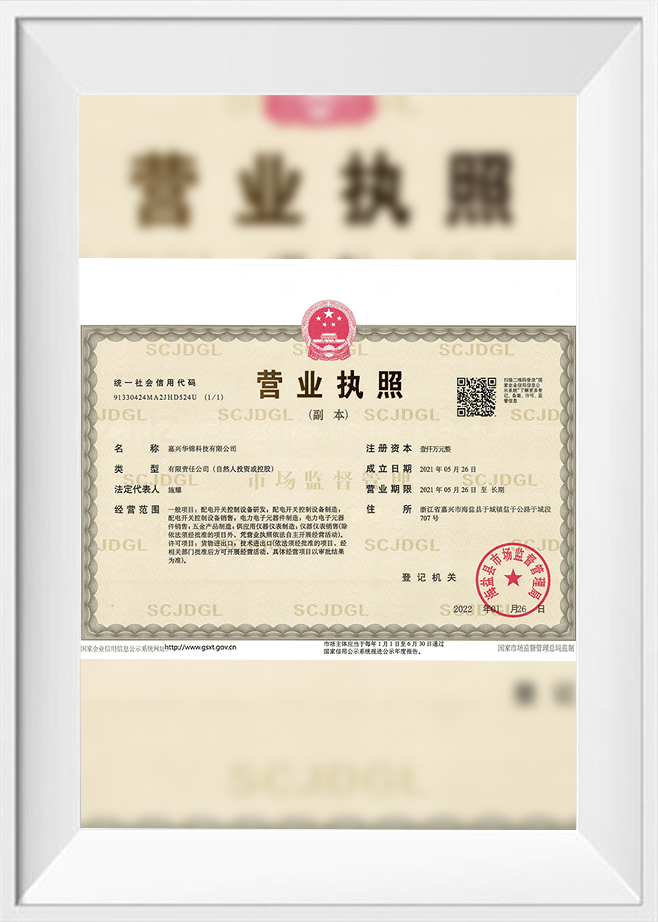
Huajin Technology Jiaxing Co., Ltd., established in May 2021 in Haiyan County, Jiaxing City, operates an 8,000 square meter high-tech manufacturing plant with over 120 dedicated employees. The company applies a strict ISO9001-2015 quality management system to control the spring tension, alignment, and contact pressure of every relay built. This precision engineering ensures that when a massive short-circuit spike hits the DC charging pile, the contacts maintain optimal mechanical holding force to resist electro-dynamic repulsion, preventing accidental contact separation and dangerous arc welding.
Q2: Can the single-phase or three-phase magnetic latching relays from Huajin Technology Jiaxing Co., Ltd. be integrated into DC fast-charging topologies?
Huajin Technology Jiaxing Co., Ltd. boasts an annual production capacity of over 10 million magnetic latching relays and offers a wide variety of single-phase, two-phase, and three-phase magnetic latching relays along with specialized motor relays. While traditional DC fast-charging networks rely on heavy-duty monostable high-voltage DC contactors, Huajin utilizes its technical patents and extensive R&D setup to deliver customized solutions for customers. They can adapt their high-capacity contact structures to match specific auxiliary power or isolation switching nodes within advanced multi-standard DC charging architectures.
Q3: What international quality certifications do Huajin Technology Jiaxing Co., Ltd. products hold to support overseas infrastructure projects?
Huajin Technology Jiaxing Co., Ltd. is a recognized high-tech enterprise that places immense emphasis on compliance and safety testing. Their relay products have successfully cleared rigorous evaluations to obtain CCC certification, State Grid certification, and international TUV certification. These extensive credentials guarantee that their components meet stringent global performance and safety criteria, allowing the company to seamlessly export roughly 30% of its annual relay production to international markets requiring verified short-circuit withstand capabilities.