



 English
 中文简体
中文简体 русский
NEWS
 Home / News / Industry News / Relay for Undervoltage Protector: Key Selection Criteria and Latching Models Home / News / Industry News / Relay for Undervoltage Protector: Key Selection Criteria and Latching Models
Content
When a voltage sag drops below the trip threshold of an undervoltage protector, the internal switching element must react within milliseconds and stay open even if the control circuit loses power. A latching relay for undervoltage protector applications from Huajin Technology Jiaxing Co., Ltd. handles this scenario through a permanent-magnet latching mechanism that does not require continuous coil current to hold its position. In practice, a voltage dip that triggers the protector can also disturb the auxiliary supply feeding the relay coil, so the relay's ability to stay tripped without power is not a convenience but a safety requirement.
A latching relay is the only practical switching element for an undervoltage protector because it maintains its tripped state without a continuous control signal. A traditional electromechanical relay holds its contact position by maintaining coil current. If that current disappears, the relay returns to its default state, which could re-close the circuit just when the line voltage is still below the safe threshold. A latching relay, by contrast, uses a permanent magnet to hold the armature in either position, and a short current pulse flips it from one state to the other.
The practical consequences are significant:
For an undervoltage protector, these properties directly address the failure mode where the protector should stay disconnected during a sustained undervoltage event but cannot because the control power itself has been interrupted. A key distinction between latching relay types is the pulse polarity. Some latching relays use two coils, one for set and one for reset, while others use a single coil and reverse the polarity to switch. For undervoltage protector applications, the dual-coil design is generally preferred because it provides a clear isolation between the trip command and the reset command, and this makes the control circuit easier to diagnose when the protector is being tested.
For a deeper analysis of undervoltage protection principles, the complete UVR relay guide covers how the protector reads line voltage and commands the relay to open.
The four parameters that determine whether a latching relay will work in an undervoltage protector are rated current, rated voltage, coil pulse characteristics, and drop-out behavior at zero coil voltage. Rated current is the first specification to check because it defines the maximum load the relay can interrupt in normal service. Undervoltage protector relays from Huajin range from 60A to 150A. The 60A and 90A models suit residential and light commercial enclosures, while the 120A and 150A versions are used in larger industrial distribution panels where the connected load is substantially heavier.
Rated voltage for these latching relays is 250VAC, which matches the operating voltage of most single-phase undervoltage protection circuits. For three-phase systems, the same 250VAC-rated relays can be used per phase, although the switching current per phase must be verified against the relay's interrupting capacity. Huajin also publishes UC2 and UC3 compliant versions, which indicate conformity with different utility metering standards that apply in specific regions.
Coil pulse characteristics determine whether the relay can be driven by the protector's control electronics. The typical pulse width needed to flip a latching relay is between 3ms and 10ms, and the coil resistance affects the peak current required from the driving circuit. Checking the relay's coil voltage option is essential; common options are 6VDC, 9VDC, 12VDC, and 24VDC, depending on what the protector's auxiliary supply can deliver.
Drop-out behavior at zero coil voltage is the most overlooked specification. A latching relay is specifically tested to confirm that a temporary loss of coil voltage does not cause the contact to change state. This is the scenario that matters in undervoltage protection, where a voltage dip may be accompanied by a supply interruption to the relay driver.
| Model | Rated Current | Rated Voltage | Power Capacity at 230VAC | Typical Application |
| HJE11B60A250VAC | 60A | 250VAC | 13.8 kW | Residential protectors |
| HJE11C90A250VAC | 90A | 250VAC | 20.7 kW | Light commercial |
| HJE11D100A250VAC | 100A | 250VAC | 23.0 kW | Commercial panels |
| HJE11F120A250VAC | 120A | 250VAC | 27.6 kW | Industrial loads |
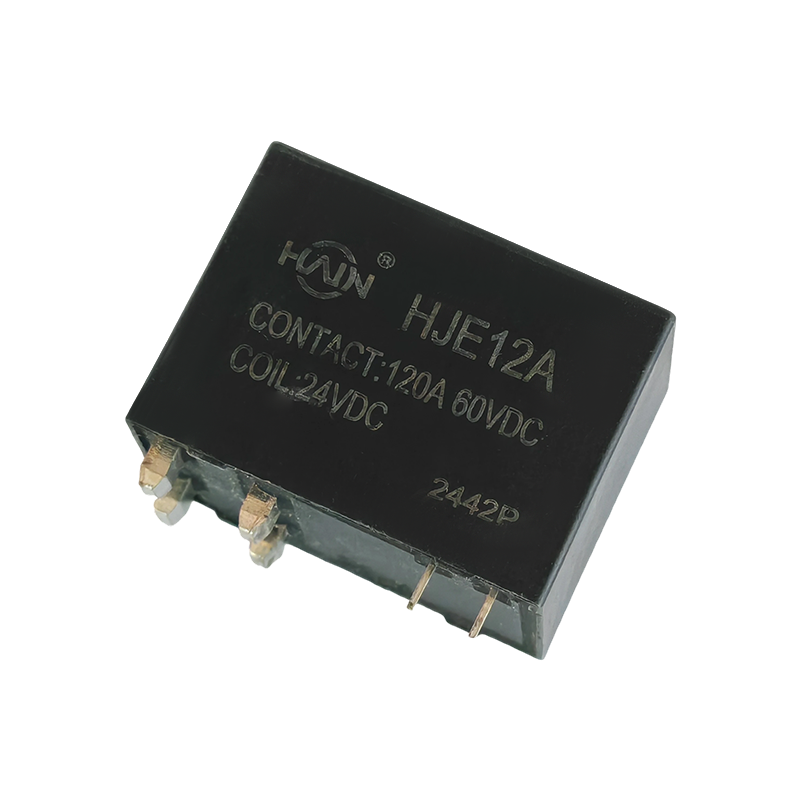
| HJE12A150A250VAC | 150A | 250VAC | 34.5 kW | Heavy distribution |
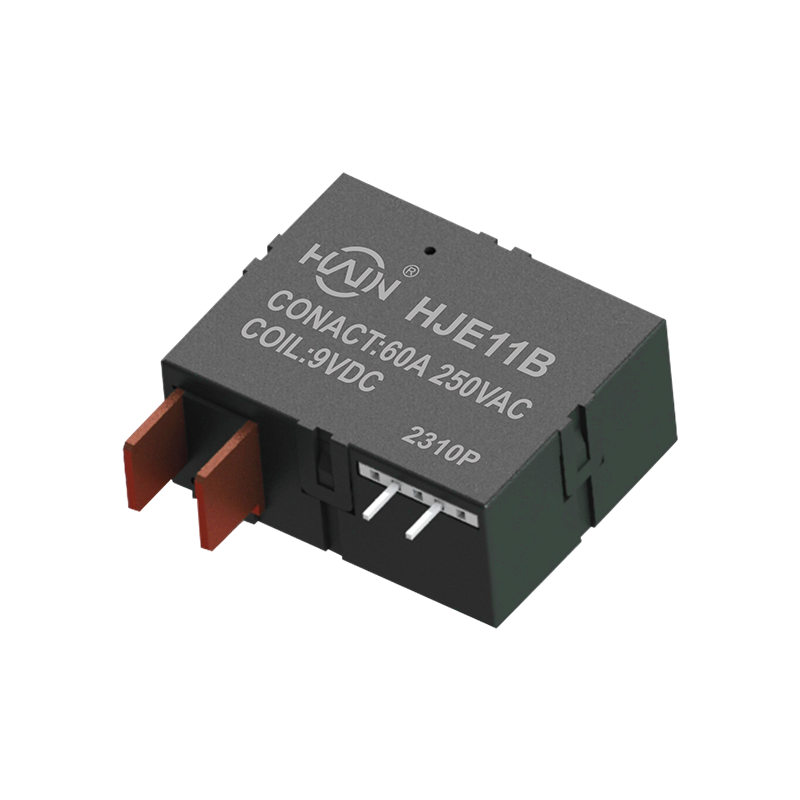 60A Magnetic Latching Relay for Undervoltage ProtectionThis latching relay switches with a pulse and holds state without power, featuring low contact resistance for stable operation and meeting IEC standards for safety.View Product →
Huajin's latching relays reduce the failure modes that cause undervoltage protectors to malfunction by combining permanent-magnet latching with low contact resistance and a compact sealed structure. Contact resistance is a key hidden factor. A relay with high contact resistance dissipates more heat at high current, and that heat accelerates insulation aging. Huajin specifies contact resistance below 5mΩ for its 60A to 150A latching relays, which keeps temperature rise within acceptable limits even when the relay operates near its rated current for extended periods.
Mechanical life also matters in field installations where an undervoltage protector may see only a few operations per year. A latching relay designed for at least 1,000,000 mechanical operations will outlast the protector enclosure and does not require replacement during the equipment's design life. Procurement teams often overlook this benefit; a slightly cheaper conventional relay may need replacement after a few years, while a latching relay with a million-operation rating remains within specification for decades.
Huajin's product family includes multiple mounting and configuration options that influence reliability in different ways:
The chart below shows the power capacity that each current rating can handle in a single-phase 230V circuit. This helps specifiers quickly map relay ratings to protector load requirements:
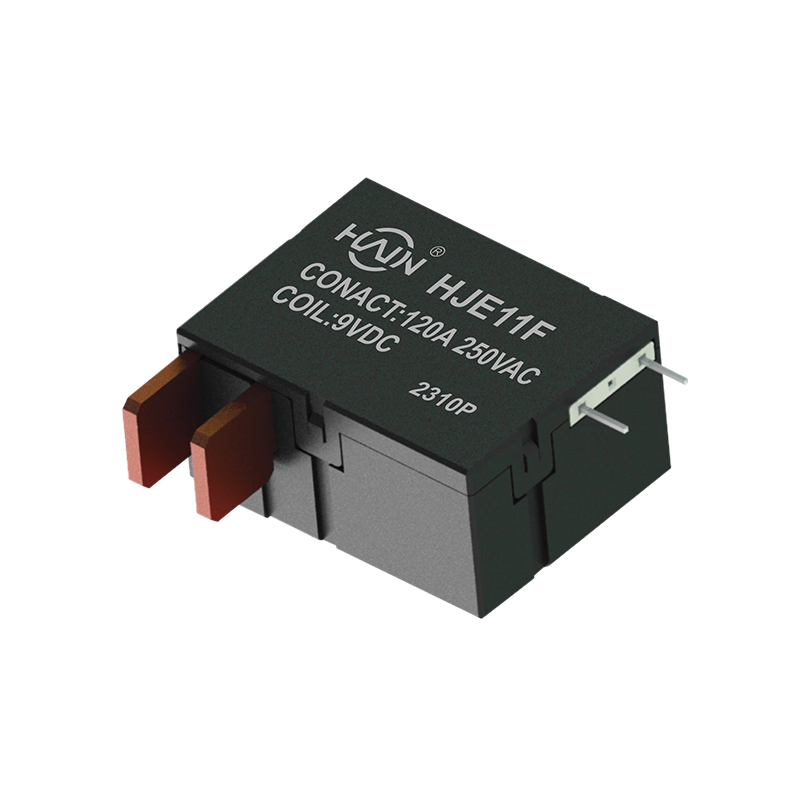 120A Latching Relay with Certifications for ProtectorsA 120A latching relay designed for undervoltage protection, carrying ISO, TUV, and CCC certifications, suitable for high-power industrial applications.View Product →
Engineers evaluating a relay for undervoltage protector integration should verify three areas: standard compliance, terminal configuration, and supplier delivery capacity. Standard compliance is the starting point in most procurement decisions. Huajin's latching relays carry ISO 9001-2015 quality management certification, CCC certification, TUV certification, and State Grid certification. These marks are not decorative. They indicate that the relay has been tested against specific national and international requirements for electrical safety, dielectric strength, and endurance under abnormal operating conditions.
Terminal configuration determines how easily the relay can be mounted inside the protector. Huajin offers dual-circuit, multi-circuit, single-phase, and three-phase latching relays, with DIN rail mounted and wall-mounted versions. For a compact undervoltage protector, the split-type design allows the relay and the current-sensing element to live in different zones of the enclosure, which reduces electromagnetic interference between the switching element and the sensing circuit.
Delivery capacity is the last variable that can make or break a project. Huajin Technology Jiaxing Co., Ltd. operates an 8,000-square-meter facility with more than 120 employees and produces over 10 million latching relays per year, with about 30 percent of output exported. The company also supports customization and welcomes factory audits from qualifying customers. This level of capacity matters when a protector manufacturer is scaling production and cannot afford a single-source bottleneck. The company's R&D center, staffed with senior engineers, also supports the design of custom terminal layouts and housing dimensions for unique protector enclosures.
 150A Latching Relay for Industrial Power SystemsThis 150A relay uses magnetic latching to maintain state during power loss, supporting high current loads in substations and industrial automation.View Product →
A standard relay needs continuous coil current to hold its position, so it resets if the coil power fails. A latching relay uses a permanent magnet to hold its position and requires only a current pulse to switch. In an undervoltage protector, a latching relay stays in the tripped state even when the control power is lost, which is the safe condition.
At 230VAC, a 20kW load draws about 87A. A 90A latching relay is the minimum rating that will work reliably, though a 100A model provides extra margin for inrush current and conductor tolerances. Huajin's HJE11C90A250VAC is rated for 20.7kW and is designed for this application range.
Indefinitely. The permanent magnet in a latching relay does not dissipate or degrade over time under normal operating conditions, and the relay is tested to confirm that its contact position remains unchanged after extended periods without coil power.
Yes. Huajin offers custom terminal configurations, shunt or CT variants, and housing sizes to fit DIN rail and wall-mounted enclosures. The product catalog includes relays specifically designed for 2P, 4P, and 7P DIN rail meters, and custom versions can be developed through the company's R&D center.
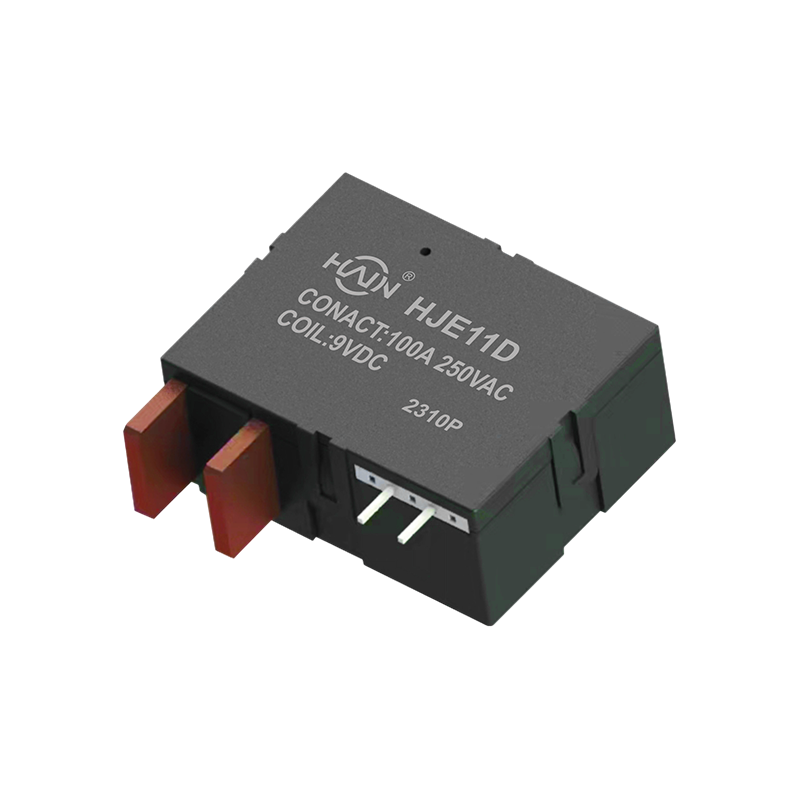
Redefining the DIN rail meter, one chip solves two major problems! The HJE11D-100A is a high-current relay with metering function designed specifically for 4P DIN rail energy meters. It aims to solve ...
See Details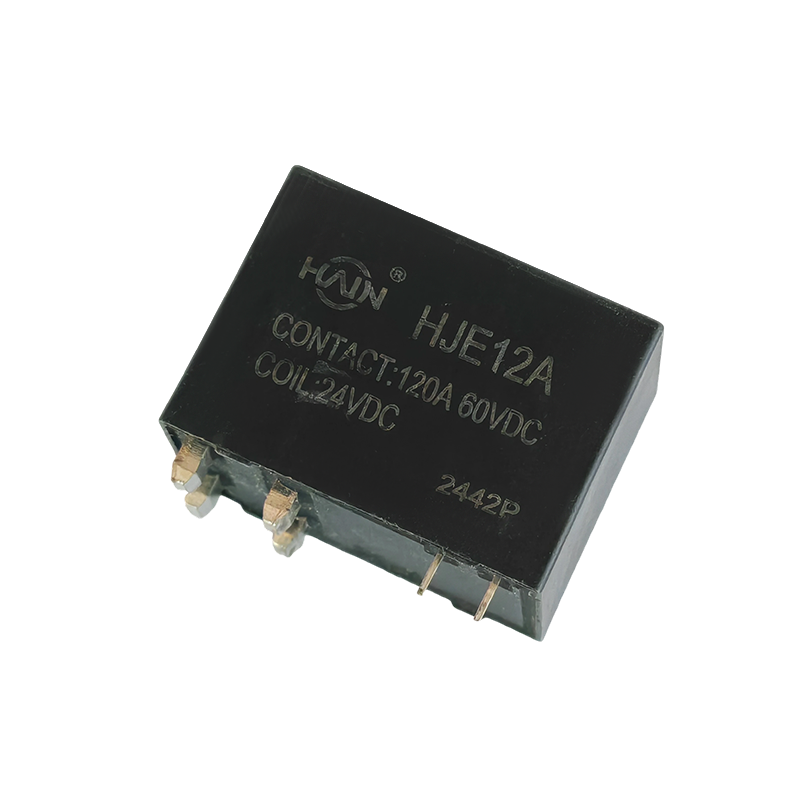
The Powerful Core of the PDU! The HJE12A-120A is a PCB-based through-hole high-power relay designed specifically for rack-mount power distribution units (PDUs), aiming to achieve PDU miniaturization, ...
See Details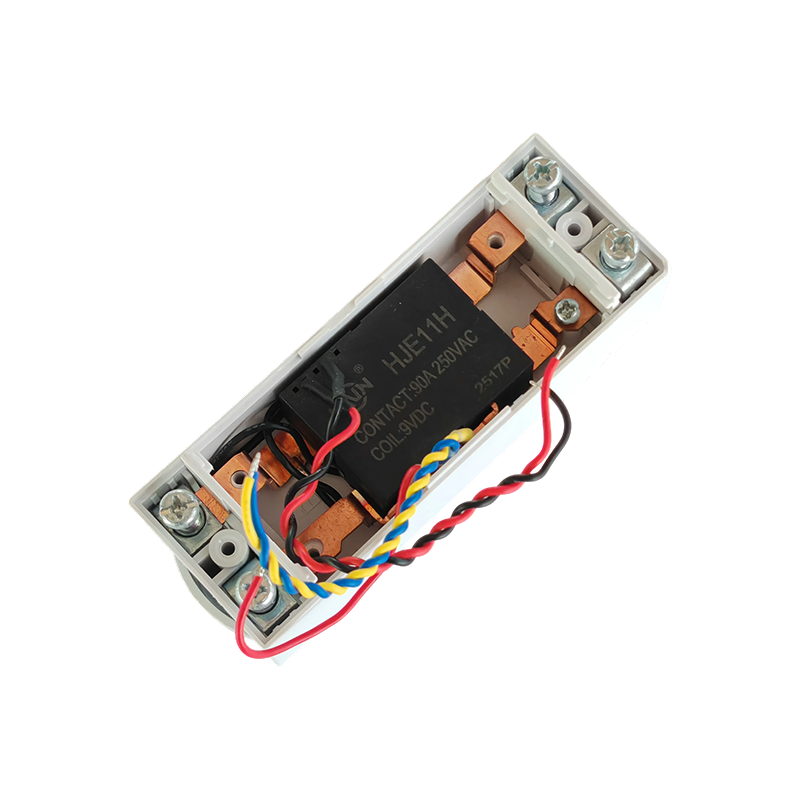
Product Definition:This product is a top-in, bottom-out 2-pole DIN rail relay designed specifically for modern power distribution systems. It integrates a 90A high current carrying capacity, compact s...
See Details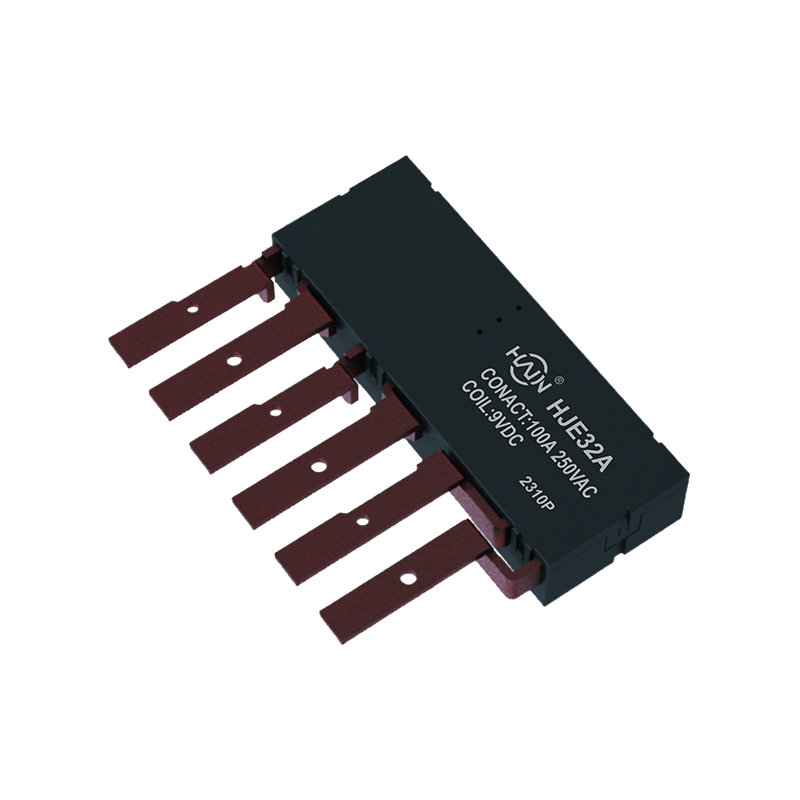
Product Definition: The HJE32A-100A is an innovative integrated three-phase relay designed specifically for 7P DIN rail meters. It aims to perfectly integrate three-phase metering and control, signifi...
See Details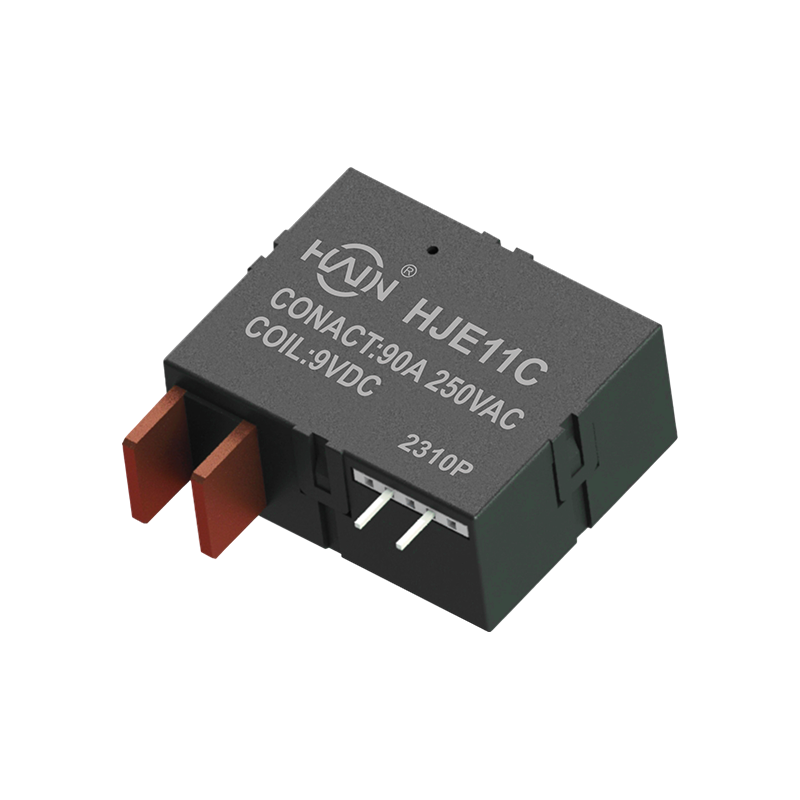
Product Definition: This product is a four-pole DIN rail relay integrating power metering and relay protection functions. Designed specifically for power metering systems, it is widely used in residen...
See Details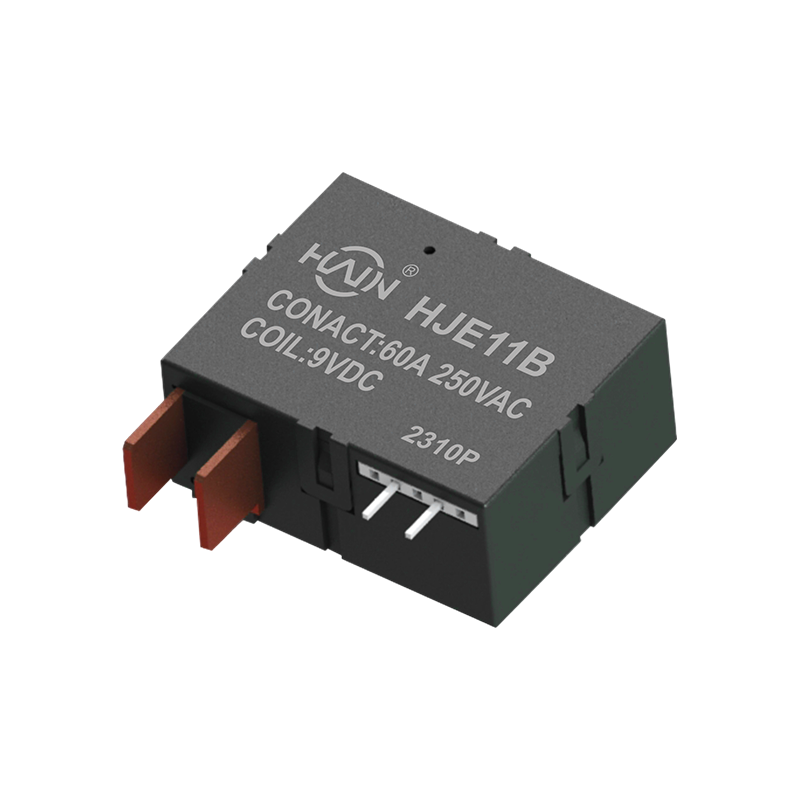
A Power Management Expert Integrating Control and Metering In increasingly complex industrial and commercial power distribution environments, refined power management and reliable control are equally ...
See Details
 Add.
Add.
|
No. 707, Yanyu Road, Yucheng Town, Haiyan County, Jiaxing City, Zhejiang Province, China
|
 Phone
Phone
|
+86-188-5739-7300
|
 Email.
|
alio@hj-relay.com
|
Copyright @ Huajin Technology Jiaxing Co., Ltd. All rights reserved.
