



 English
 中文简体
中文简体 русский
NEWS
 Home / News / Industry News / Complete Relay for Charging Station: AC and DC Latching Relay Specs, Selection Guide Home / News / Industry News / Complete Relay for Charging Station: AC and DC Latching Relay Specs, Selection Guide
Content
Charging stations are power-dense environments where every switching element has to work flawlessly for years. A single contact failure inside a DC fast-charge cabinet can take an entire charging gun offline, while the lost revenue per idle charging spot can exceed hundreds of euros per day. For charging pile manufacturers, the relay for charging station is not a generic BOM item; it is a reliability decision that directly determines field return rates and operator uptime. Huajin Technology Jiaxing Co., Ltd. designs magnetic latching relays specifically for AC and DC charging PDU circuits, with current ratings up to 150A and voltage classes from 48VDC to 250VAC. The company has been producing latching relays for charging pile and metering applications since 2021, with over 100 engineers and a 10-million-unit annual production capacity.
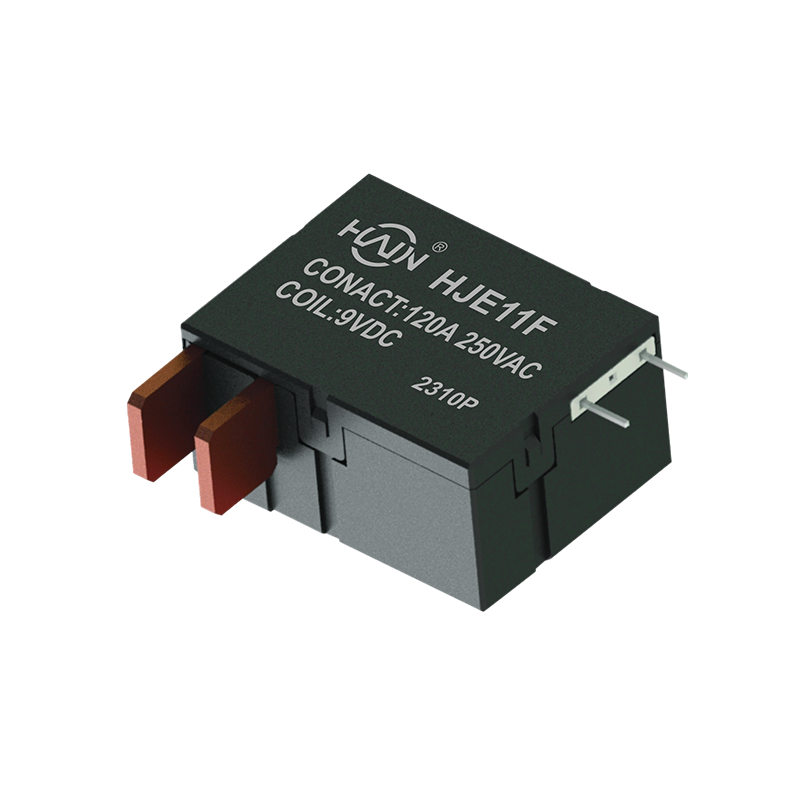 HJE11F-120A-250VAC Latching Relay for PDUProduct Overview: Designed specifically for high-density power distribution units (PDUs), this high-power control core is directly integrated into the PCB board. With ...View Product →
150A
Max DC Rating
250VAC
Max AC Rating
20-80ms
Coil Pulse
0W
Holding Power
The latching relay in a charging station is a bistable switch. It changes state with a short pulse and holds that state indefinitely without power. This is why charging pile manufacturers specify latching relays instead of standard electromagnetic relays. In a typical charging station PDU, the relay is the primary switching element between the charging controller and the power output stage.
The relay for charging station is a bistable switching device that maintains its contact position with permanent magnets, consuming electrical power only during the brief state-change pulse.
At its core, the latching relay has two states: open and closed. The control board sends a current pulse through the coil. The coil generates a magnetic field that moves the armature, closing or opening the contacts. Permanent magnets then hold the armature in that position. The pulse duration is typically 20-80ms, which is enough to overcome the spring return force.
Because the relay does not need continuous current to stay in a given state, the heat load inside a sealed PDU cabinet is significantly lower. This extends the life of adjacent components and reduces the risk of insulation degradation. For AC and DC charging station builders, this translates into fewer field failures and better charging availability. On a per-relay basis, minimizing holding power also improves the overall energy efficiency of the charging station during standby intervals.
The relay for charging station must match the bus architecture of the charging pile. AC charging stations route 250VAC through a PDU, while DC fast-charging stations control a 48VDC bus at higher currents. The two are not interchangeable, and using the wrong voltage class is a safety risk as well as a reliability problem.
| Feature | Relay for AC Charging Station | Relay for DC Charging Station |
| Rated voltage | 250VAC | 48VDC |
| Typical current | 120A | 150A |
| Load type | PDU branch control | DC contactor control |
| Contact form | 1PST or 1PDT | 1PST |
| Primary standard | UC3 compliant | DC rating validation |
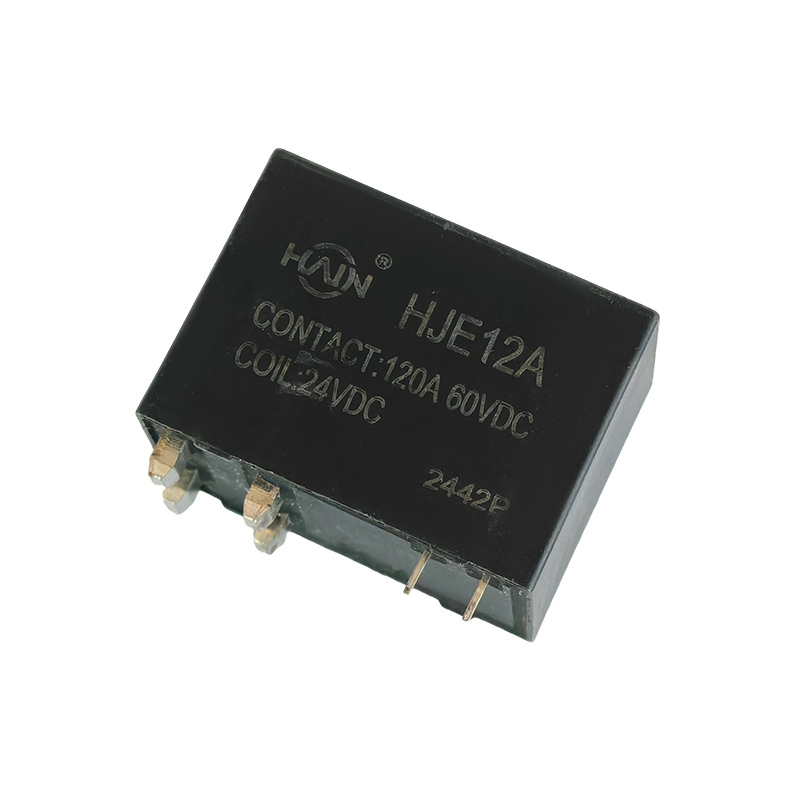 HJE12A-150A-48VDC Latching Relay for DC chargingProduct Definition: The HJE12A-150A-48VDC is a high-performance DC relay designed specifically for 48VDC voltage systems, with a maximum current carrying capacity of 1...View Product →
In AC charging stations, the latching relay sits inside the power distribution unit. It receives control signals from the charging controller and switches the 250VAC branch circuit. The HJE11F120A250VAC is a common choice for this application, with 120A rating and UC3 compliance. The relay must handle the inrush current of the charging gun's internal electronics without contact welding.
DC fast-charging stations operate on a 48VDC bus. The relay must handle high DC currents, which create different arc extinction demands than AC loads. DC switching produces a sustained arc that can erode contacts if the relay is not properly rated. The HJE12A150A48VDC is designed for this exact condition, providing 150A switching capacity at 48VDC. The contact gap and magnet design are optimized to break DC arcs reliably.
Selecting the relay for charging station is not a matter of matching the highest current rating. The actual load type, ambient temperature, inrush profile, and switching frequency all affect contact life. These are the specifications that matter when checking a relay against a charging station design.
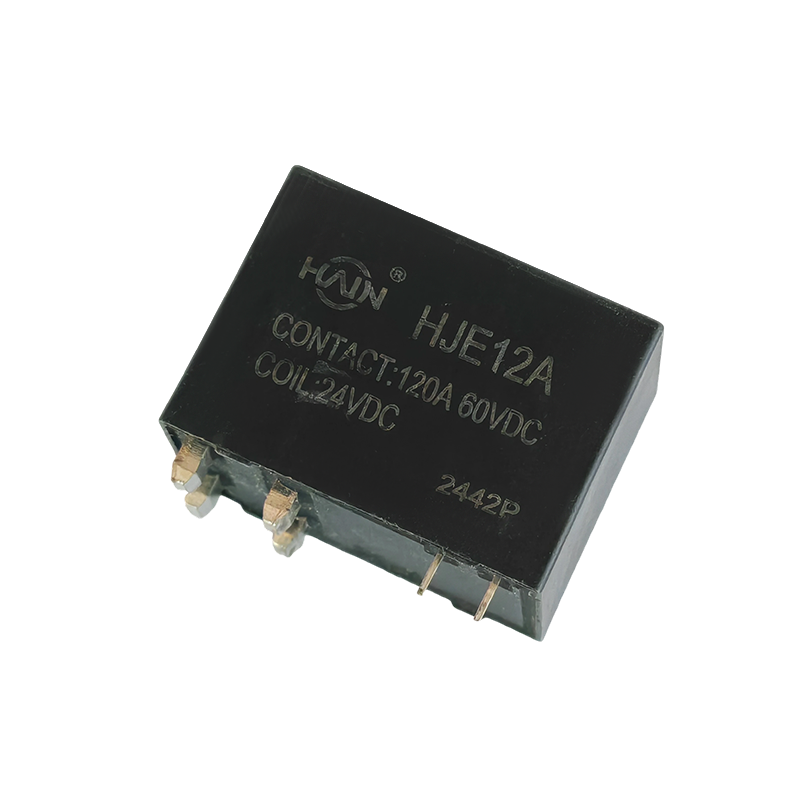 HJE12A-120A-250VAC Latching Relay for PDUThe Powerful Core of the PDU!View Product →
The relay must match the bus voltage first. For AC charging PDU circuits, 250VAC is the standard. For DC charging stations, 48VDC is the common intermediate bus. The current rating should accommodate the maximum load plus a margin, but not overload the contact set. A 120A relay on a 100A load has more contact life margin than a 120A relay running at its absolute limit.
China's State Grid has issued multiple editions of metering and protection relay standards. UC2 and UC3 represent different compliance levels, while the 25th Edition of the State Grid standard defines specific performance requirements for distribution equipment relays. A relay with the right standard compliance eases certification work for the charging station manufacturer. For export markets, TUV and ISO9001-2015 certifications are also important signals of quality consistency.
Charging station relays come in different package formats. Some are designed for PCB mounting, others for DIN rail. The HJE11F120A250VAC and HJE12A120A250VAC offer different mounting configurations, allowing charging pile designers to choose the package that fits their PDU layout. Split-type and integrated variants are also available where the relay is paired with a shunt or current transformer.
A relay that fails inside a charging station costs far more than the relay itself. The repair cost, the downtime, and the loss of service revenue can add up quickly. Certification is a starting point, but production discipline is the real differentiator.
Huajin Technology Jiaxing Co., Ltd. operates with a 10-million-unit annual capacity for magnetic latching relays. The company holds ISO9001-2015, CCC, State Grid, and TUV certifications, and exports roughly 30% of its production.
Certified relays also reduce the risk of contact welding and switching failures, which are among the core charging station safety benefits that operators depend on. In a charging station, a welded relay contact can cause a short circuit or an uncontrolled current flow, which is why the switching element needs to be qualified for the actual load profile.
No. Smart meter relays are designed for lower currents and different voltage classes. Charging station applications require high-current relays rated for 120A to 150A with the appropriate AC or DC voltage rating. Using a meter relay in a charging pile risks early contact failure and poses a safety concern.
Magnetic latching keeps standby power at zero, reduces heat buildup inside sealed PDU cabinets, and maintains contact state even if auxiliary power is lost. Standard electromagnetic relays need continuous coil current, which means constant heat generation. In a charging station with multiple relays in one enclosure, that heat would accumulate.
A DC charging station typically needs a latching relay rated for 48VDC at 150A. The HJE12A150A48VDC is a specific example designed for DC fast-charging PDU circuits. Higher ratings are possible but require careful contact design and arc management.
Look for production capacity, third-party certification, and a track record of supplying charging pile and metering manufacturers. A supplier with in-house R&D, full testing capability, and a stable export ratio will deliver more consistent quality than a purely assembled product.

Product Definition: The HJE12A-150A-48VDC is a high-performance DC relay designed specifically for 48VDC voltage systems, with a maximum current carrying capacity of 150A. It features excellent switch...
See Details
The Powerful Core of the PDU! The HJE12A-120A is a PCB-based through-hole high-power relay designed specifically for rack-mount power distribution units (PDUs), aiming to achieve PDU miniaturization, ...
See Details
Product Overview: Designed specifically for high-density power distribution units (PDUs), this high-power control core is directly integrated into the PCB board. With a robust 120A/250VAC load capacit...
See Details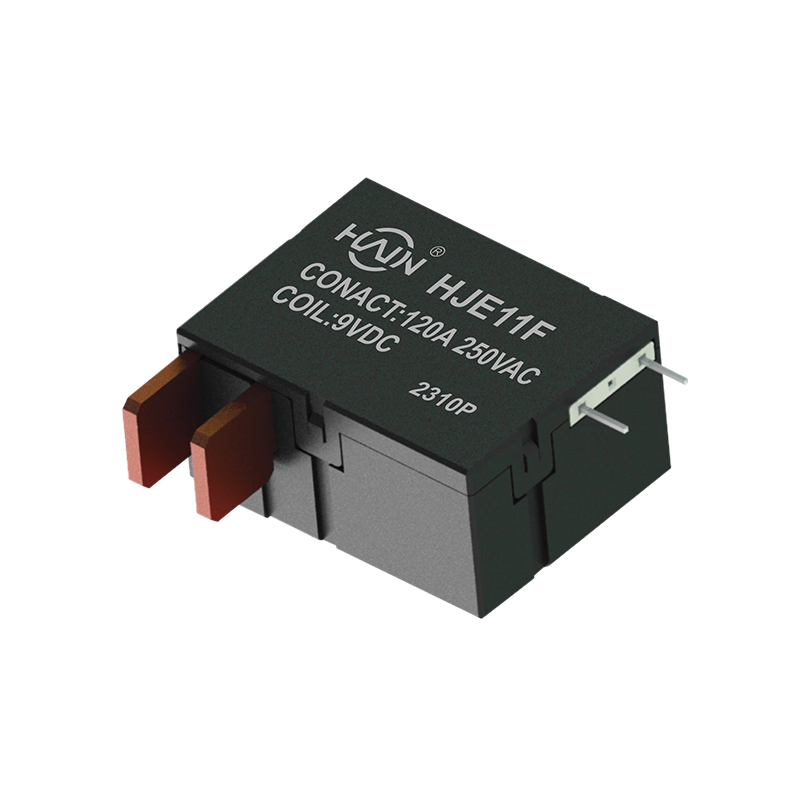
Product Definition: The HJE11F-120A-250VAC is a high-performance magnetic latching relay designed specifically for undervoltage protection systems. It supports a maximum current of 120A and is suitabl...
See Details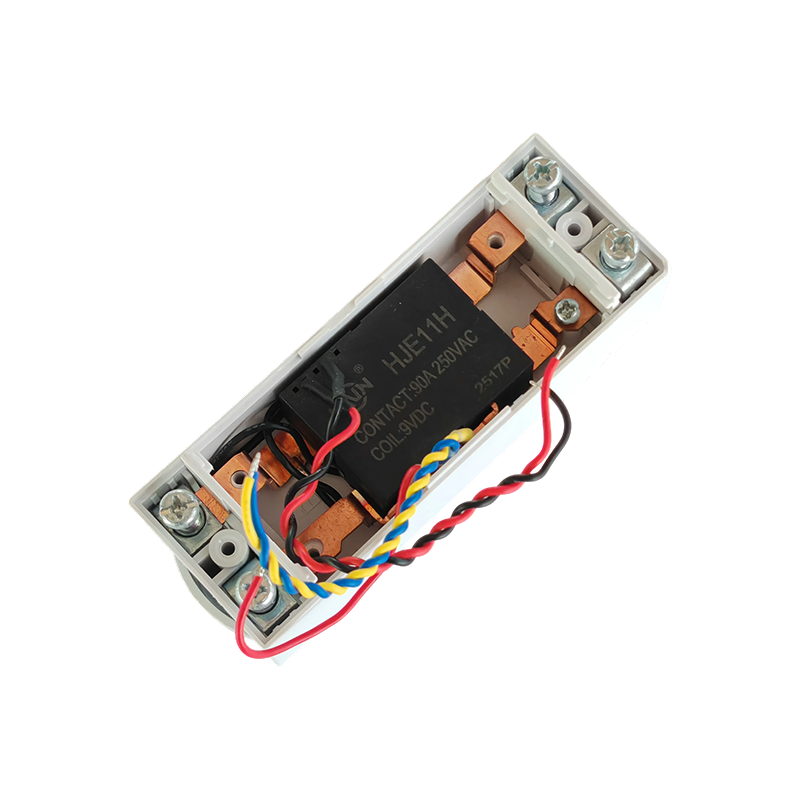
Product Definition:This product is a top-in, bottom-out 2-pole DIN rail relay designed specifically for modern power distribution systems. It integrates a 90A high current carrying capacity, compact s...
See Details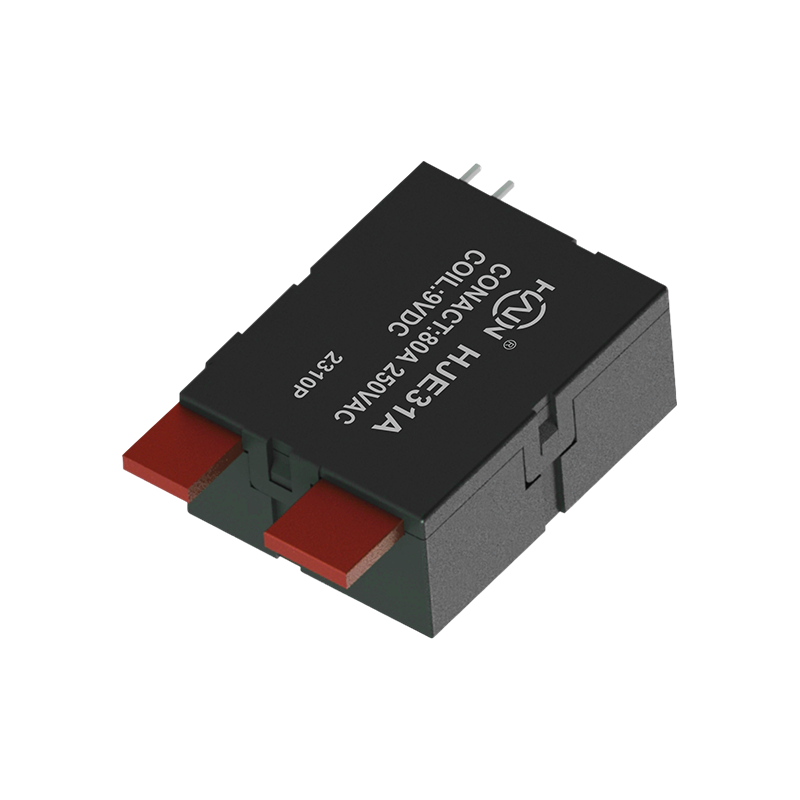
Product Definition: A bottom-in, bottom-out relay specifically designed for 2P DIN rail meters, aiming to improve installation efficiency and system reliability through optimized wiring structure.
See Details
 Add.
Add.
|
No. 707, Yanyu Road, Yucheng Town, Haiyan County, Jiaxing City, Zhejiang Province, China
|
 Phone
Phone
|
+86-188-5739-7300
|
 Email.
|
alio@hj-relay.com
|
Copyright @ Huajin Technology Jiaxing Co., Ltd. All rights reserved.
