



 English
 中文简体
中文简体 русский
NEWS
 Home / News / Industry News / Relay for Overvoltage: How to Choose the Right Latching Relay for Overvoltage Protectors Home / News / Industry News / Relay for Overvoltage: How to Choose the Right Latching Relay for Overvoltage Protectors
An overvoltage protector that trips correctly but cannot reconnect leaves a home without power for hours after a transient fault. The opposite failure, contacts welded shut during a sustained overvoltage, is worse because the protection function disappears entirely. In both cases the problem starts in the same place: the switching relay inside the protector. The practical conclusion is to select a relay for overvoltage duty by its continuous current rating, its latching behavior and the standards it already meets before you start the PCB layout.
A relay for overvoltage is the power switching element mounted inside an overvoltage or undervoltage protector. The protector's electronic circuit monitors line voltage continuously. In a 220 V single-phase network, most protectors open the circuit when the voltage rises above roughly 270 V AC, then reconnect after the supply recovers, usually after a short delay. The relay performs the physical disconnection; the electronics only decide when it should happen.
Because the relay carries the full load current in the closed state, its specification is different from the protector's. A protector rated 63 A may need a relay rated 90 A or 100 A, because the relay must clear the load during a fault and survive continuous current during normal operation. When you talk to a component supplier, bring three numbers: the protector's nominal output current, the maximum continuous load your customers will connect, and the inrush characteristics of that load. These three values determine the contact rating.
Latching relays hold either contact position without coil power; a single pulse moves them to the other position. In an overvoltage protector this is exactly the behavior needed. The relay opens when the supply crosses the threshold and stays open even if the controller loses power. After a normal recovery sequence, a reverse pulse returns it to the closed state. The switching sequence is described in detail in our note on how an overvoltage self-locking relay improves industrial voltage safety.
Latching relays are the standard switching element in this application for three concrete reasons.
The practical result is a smaller enclosure, lower temperature rise and longer electrical endurance. For a component that must sit inside a distribution board for decades, that margin separates a reliable disconnect from a melted terminal.
Rated current is the first purchasing criterion. The relay must carry the protector's nominal current continuously within its temperature-rise limit and must also withstand the momentary inrush of motors, transformers and capacitor banks connected downstream.
| Model | Contact Rating | Typical Application |
|---|---|---|
| HJE11B60A250VAC | 60 A / 250 VAC | Compact single-phase protectors, nominal loads up to 50 A |
| HJE11C90A250VAC | 90 A / 250 VAC | 63 A outputs with margin for sustained loading |
| HJE11D100A250VAC | 100 A / 250 VAC | 80 A outputs and higher ambient temperatures |
| HJE11F120A250VAC | 120 A / 250 VAC | 100 A-class outputs, motor and capacitor-switching loads |
| HJE12A120A250VAC | 120 A / 250 VAC | 100 A-class outputs, shared with AC charging PDU designs |
Keeping at least 20 to 25 percent margin between the protector's nominal current and the relay contact rating is a common design rule that absorbs the effects of voltage sags, load growth and enclosure temperature. The 60 A latching relay for overvoltage protectors fits compact single-phase designs with nominal outputs of 40 to 50 A. A 63 A output stage belongs on the 90 A or 100 A relay, and 100 A-class protectors need the 120 A options.
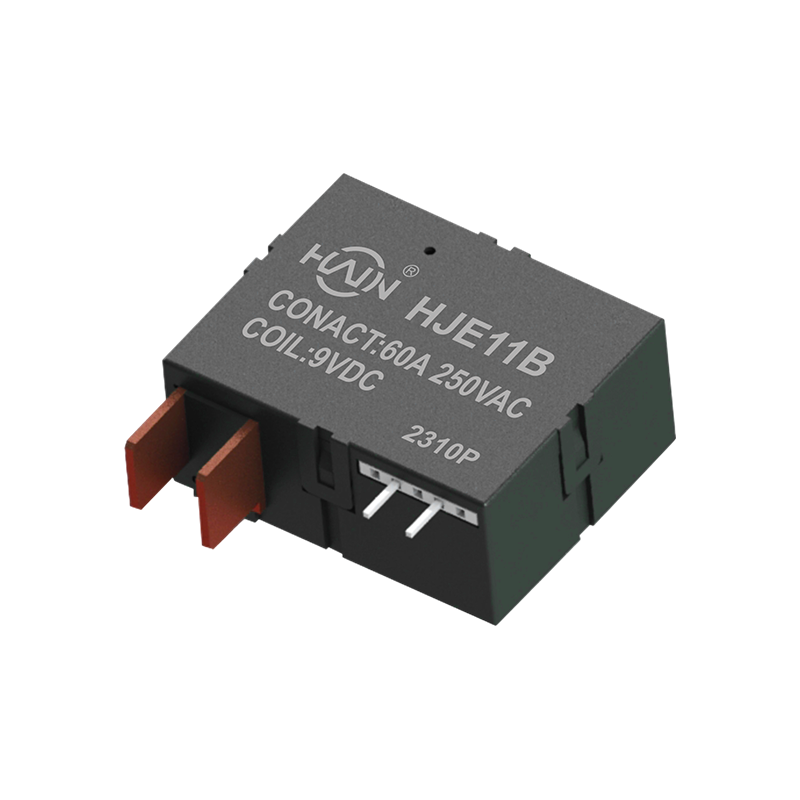 Wholesale HJE11B-60A-250VAC Latching Relay Suppliers, OEM/ODM CompanyHuajin Technology Jiaxing Co., Ltd. is China wholesale HJE11B-60A-250VAC Latching Relay suppliers and OEM/ODM company, Product Overview: ...View Product →
A second detail is visible in the table: the HJE12A120A250VAC shares its 120 A rating with the HJE11F120A250VAC, and the same HJE12A variant also appears in the AC charging-station PDU portfolio. When a design team has qualified one relay family, reusing the same contact rating across products reduces spare-part inventories and certification paperwork.
In China, relays used in power metering and protection are qualified against the State Grid's unified component specifications. UC2 and UC3 are successive versions of the specification for latching relays in metering equipment, and the 25th Edition refers to the current State Grid technical standard for single-phase and three-phase products. A relay carrying a UC3 or 25th-edition designation has already passed the dielectric, impulse and endurance tests required for grid supply.
Outside China, these marks are useful evidence of hardening rather than paperwork. A relay qualified to State Grid requirements has proven switching endurance at rated current, insulation levels suitable for 250 VAC mains and controlled contact behavior over millions of operations. If your protector will eventually reach a grid project, choosing a relay that already holds these qualifications removes one round of component-level type testing.
Three documents matter most: ISO 9001:2015 for the quality system, CCC for Chinese market access, and TUV or an equivalent independent safety mark for export markets. The same logic behind high-reliability control for smart meters applies here: a component that passes a recognized standard today prevents field failures years later.
Work through these five checks with the datasheet before you commit to a part number.
For a 63 A output stage, the 90 A latching relay for overvoltage duty is the sweet spot: it satisfies the margin rule without the larger coil pulse of a 120 A part. Larger contacts need more coil energy and more enclosure space, so over-specifying current costs you in drive circuitry and thermal budget.
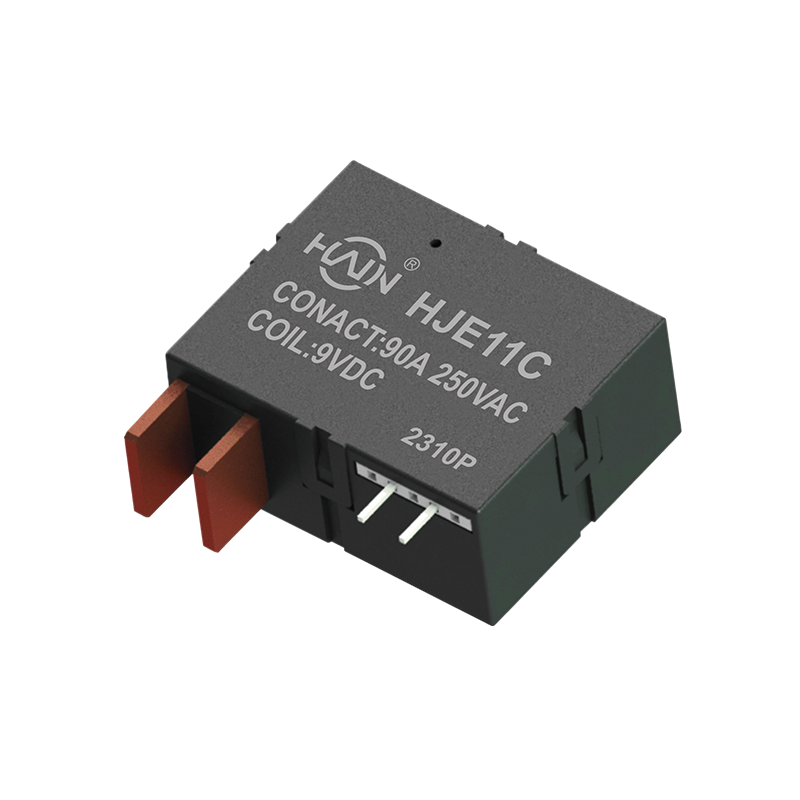 Wholesale HJE11C-90A-250VAC Latching Relay Suppliers, OEM/ODM CompanyHuajin Technology Jiaxing Co., Ltd. is China wholesale HJE11C-90A-250VAC Latching Relay suppliers and OEM/ODM company, Product Definition...View Product →
Supplier capability belongs in the specification as well. A manufacturer with a capacity of more than ten million latching relays per year and roughly 30 percent of output exported accumulates production and field data on a scale that a laboratory sample cannot match. Huajin Technology's manufacturing and quality setup is described on the company profile page.
Size the relay in this order: nominal load current, margin for inrush and enclosure temperature, then standards. In practice that means 60 A for compact protectors up to 50 A, 90 A for 63 A outputs, 100 A for 80 A outputs and 120 A for 100 A-class products. If the load includes motors, air conditioners or capacitor banks, move one class higher.
When a full thermal test is still ahead, the 120 A latching relay for high-current overvoltage protectors is a safe starting point because the extra contact margin covers unknowns in the system. The larger relay is not always the better relay, though; it needs a stronger coil pulse and a roomier enclosure. A component supplier that makes the relay in-house can map your protector specification to an exact model, confirm pulse width, contact resistance and life data, and adjust the design before the first prototypes are built.
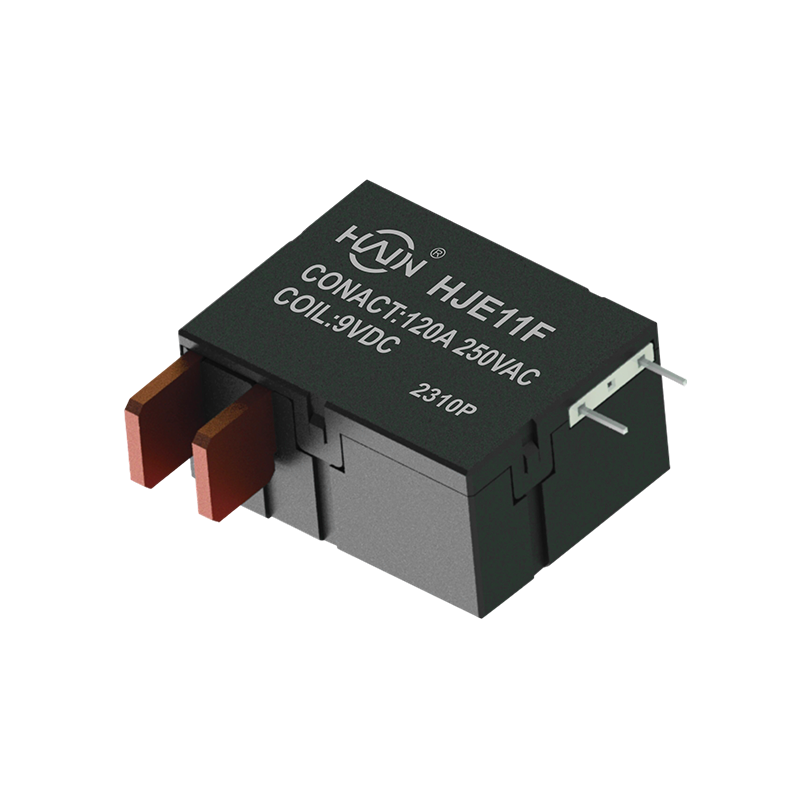 Wholesale HJE11F-120A-250VAC Latching Relay Suppliers, OEM/ODM CompanyHuajin Technology Jiaxing Co., Ltd. is China wholesale HJE11F-120A-250VAC Latching Relay suppliers and OEM/ODM company, Product Overview:...View Product →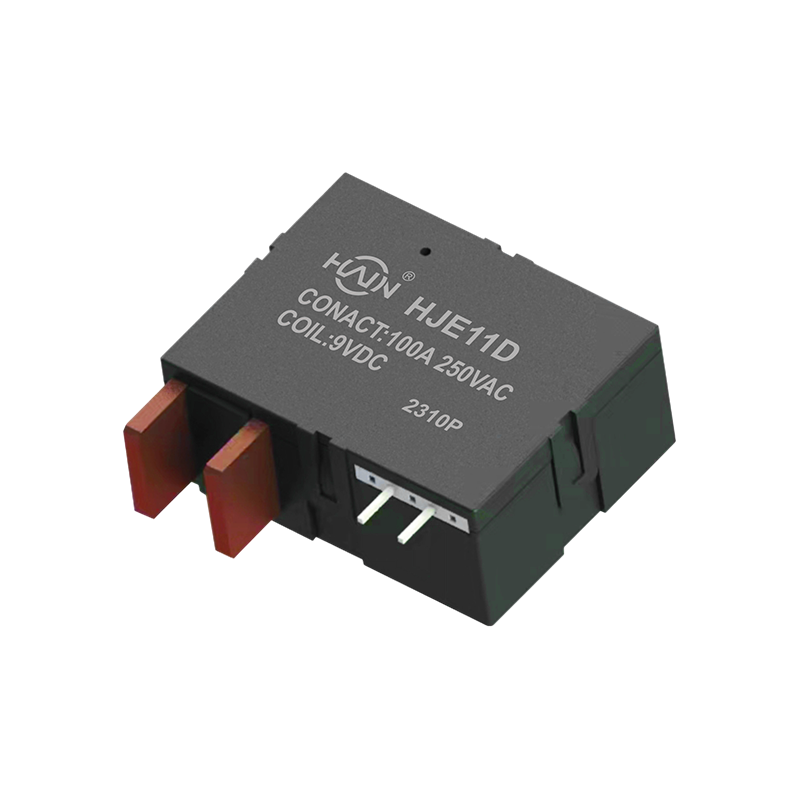
Redefining the DIN rail meter, one chip solves two major problems! The HJE11D-100A is a high-current relay with metering function designed specifically for 4P DIN rail energy meters. It aims to solve ...
See Details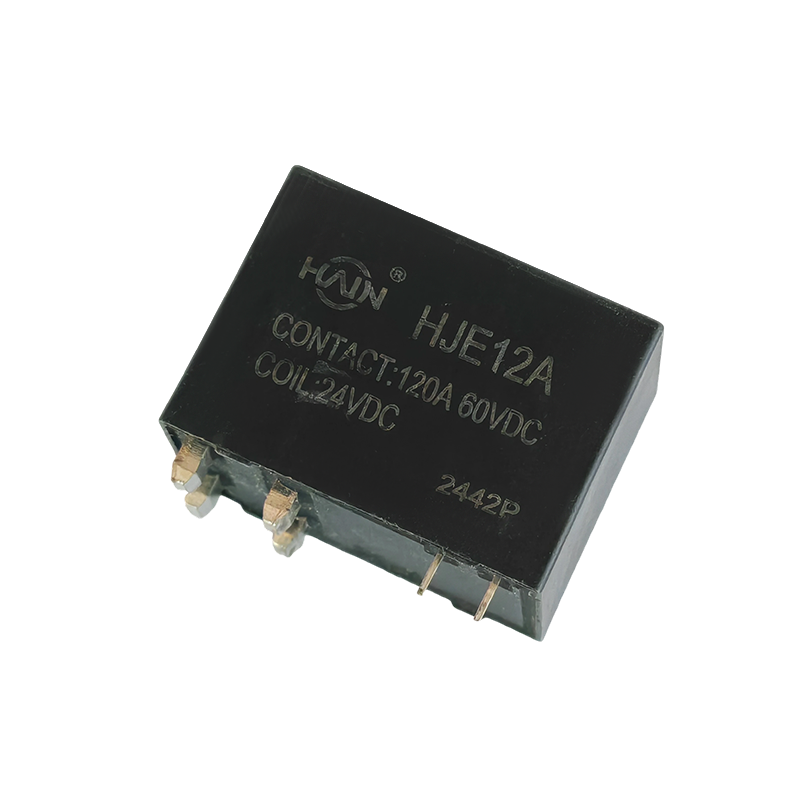
The Powerful Core of the PDU! The HJE12A-120A is a PCB-based through-hole high-power relay designed specifically for rack-mount power distribution units (PDUs), aiming to achieve PDU miniaturization, ...
See Details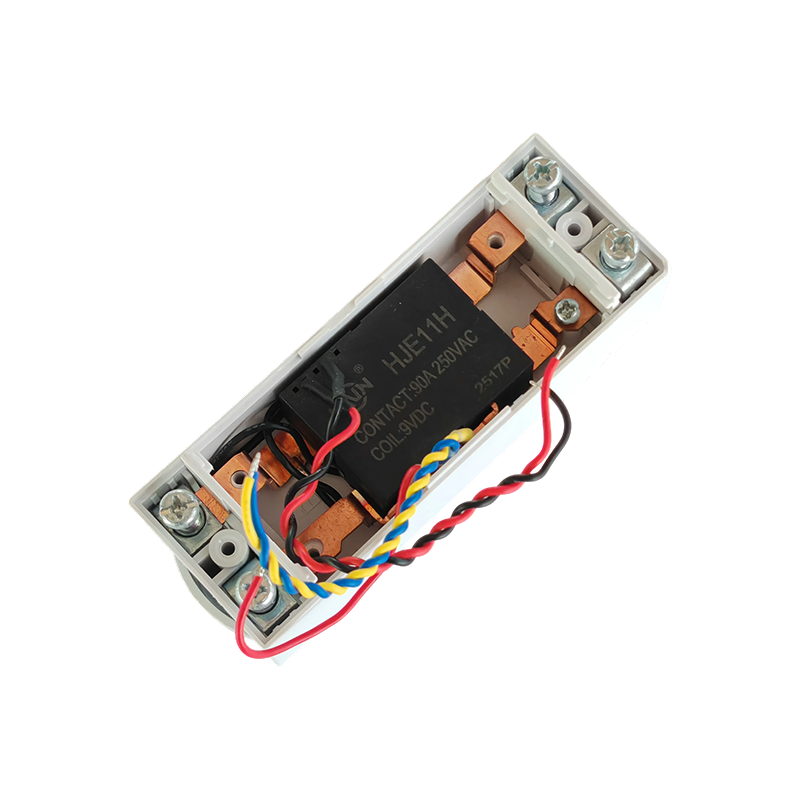
Product Definition:This product is a top-in, bottom-out 2-pole DIN rail relay designed specifically for modern power distribution systems. It integrates a 90A high current carrying capacity, compact s...
See Details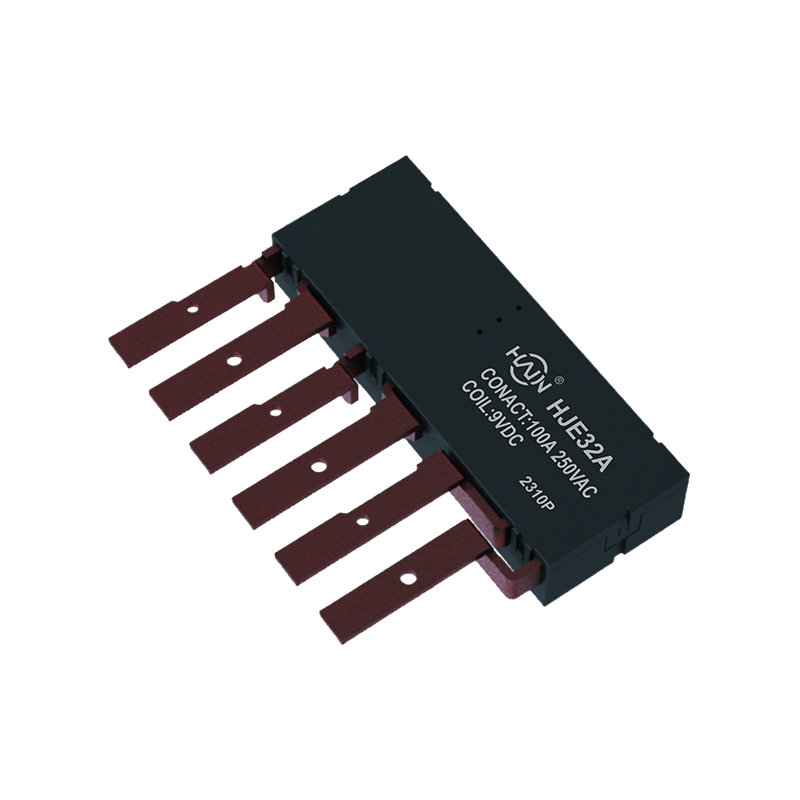
Product Definition: The HJE32A-100A is an innovative integrated three-phase relay designed specifically for 7P DIN rail meters. It aims to perfectly integrate three-phase metering and control, signifi...
See Details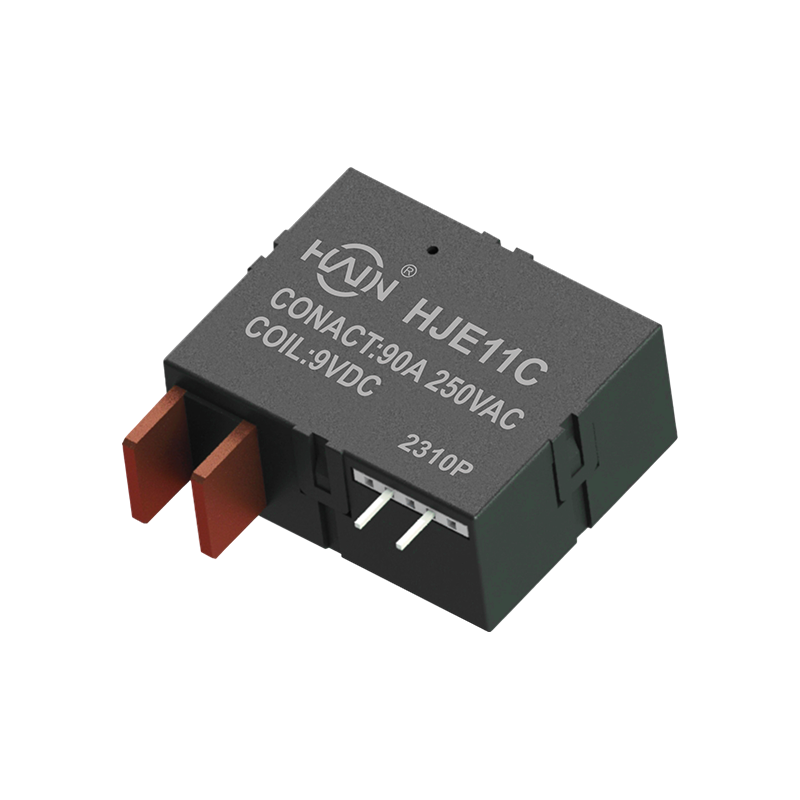
Product Definition: This product is a four-pole DIN rail relay integrating power metering and relay protection functions. Designed specifically for power metering systems, it is widely used in residen...
See Details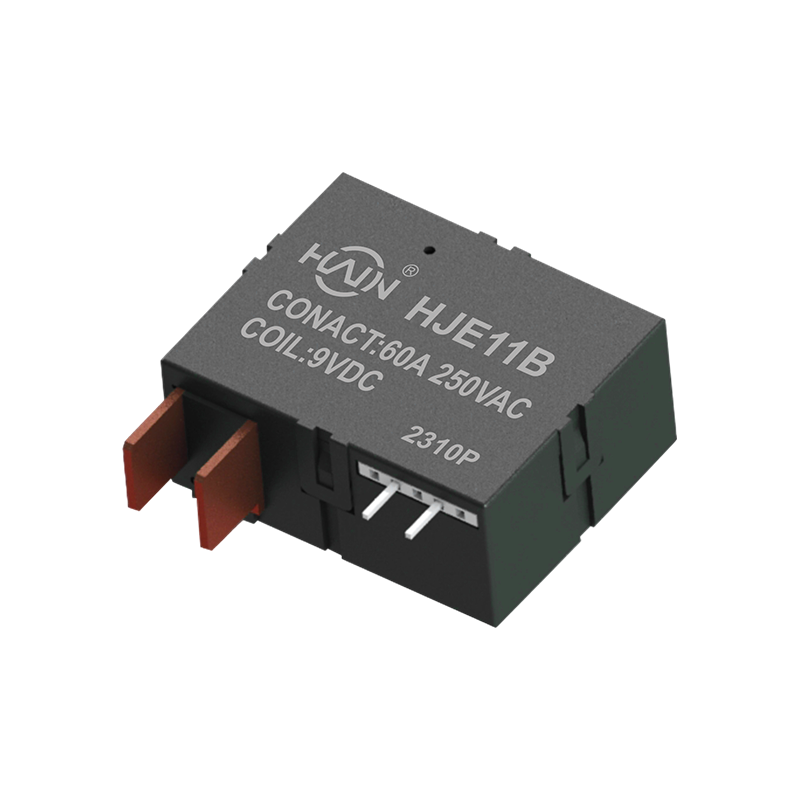
A Power Management Expert Integrating Control and Metering In increasingly complex industrial and commercial power distribution environments, refined power management and reliable control are equally ...
See Details
 Add.
Add.
|
No. 707, Yanyu Road, Yucheng Town, Haiyan County, Jiaxing City, Zhejiang Province, China
|
 Phone
Phone
|
+86-188-5739-7300
|
 Email.
|
alio@hj-relay.com
|
Copyright @ Huajin Technology Jiaxing Co., Ltd. All rights reserved.
